
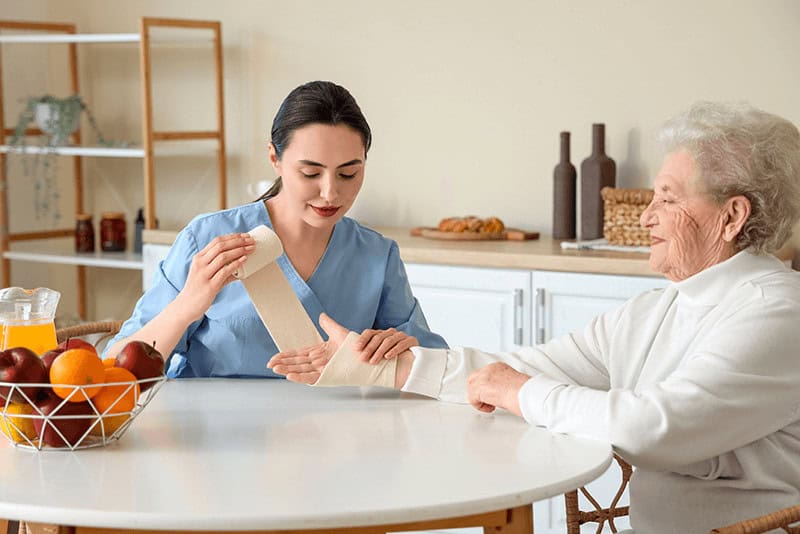
Whether you are facing an acute or chronic wound, you need to ensure that it is healing correctly. The best way to do this is by working with a wound expert who can monitor and treat the injury professionally. Without this expert care you risk growing wounds, infections, or in the worst-case scenario: amputation. Don’t ignore your wounds or worry about finding a wound care specialist in your area. Learn how at-home wound experts can bring expert care to you and heal your injuries in a timely manner.
What are Wound Experts?
Wound experts are medical professionals who specialize in healing wounds, specifically those that are complicated. This role requires a nursing degree followed by a wound care certification. To obtain this certification medical personnel need to complete three years of wound care experience along with a written examination. Wound experts go on to earn continuing education credits and get re-certified every five years, ensuring they are always knowledgeable on the latest forms of wound care.
These specialists help with various injuries like non-healing or infected wounds, ulcers, and sores. Wound experts also work in numerous different environments so they can help patients everywhere. Emergency rooms, long-term care and rehab facilities, clinics, and even home health agencies use wound care specialists to make sure their patients’ wounds are healing properly.
What Do Wound Experts Do?
Treating a wound has many steps that must be executed perfectly to encourage recovery. At their most basic level, wound care experts clean, treat, and dress your injuries, as well as provide therapy plans should they be needed. But each of these steps require precision and extensive wound knowledge. The wound care expert starts by speaking to the patient and learning how they sustained this injury and possible reasons why it’s not healing. From there wound experts will follow a general recovery plan.
First, wound experts will clean the affected area with soap and water, or in some cases a saline solution. If necessary, they will apply antibacterial ointments to prevent infection. The specialists will then dress the wounds to protect them from outside debris and prevent fluid leakage. Depending on the severity of the wound, this dressing may only need to be replaced a few times each week, or as frequently as multiple times a day. Then there are several treatments a wound expert can perform to further clean and disinfect the injury:
Debridement
Debriding a wound involves removing dead or infected tissue from the surrounding area. While effective, this process can be painful, so a local anesthetic is always used to numb the wound. This way a wound expert stops the spread of infection while also ensuring the patient’s comfort.
Ultrasound Therapy
Ultrasound therapy uses sound waves to break down infected or dead tissue to clean around the wound area. It also increases blood flow to the wound, speeding up the natural healing process. Wound experts can even perform this effective treatment in their patients’ homes, speeding up the healing process.
Negative Pressure Therapy
Like ultrasound therapy, negative pressure therapy works to increase blood flow and heal the wound faster. Instead of using sound waves, this therapy uses suction to drain fluid from the wound while also encouraging blood flow. Also available for at-home treatment, this therapy simultaneously cleans and heals injuries.
When Should You See a Wound Expert?
Not every wound requires a wound expert. There are certain obvious factors that can indicate it’s time to seek medical help. For example, if you’re dealing with a chronic wound, it’s time to see a specialist. According to the Journal of Family Medicine and Primary Care, a chronic wound is a wound that hasn’t shown any signs of healing for more than six weeks despite normal treatment. Chronic wounds usually include ulcers and traumatic injuries like an infected surgical wound.
Regular wounds can also get infected and need a wound expert to fix them. These injuries should be easy to spot as they will usually become red, swollen, and painful. Infected wounds can also give patients a fever of 101 degrees Fahrenheit or higher. These infections can be dangerous and lead to serious complications like amputation if not treated quickly, which is why it’s important to see a wound expert right away.
How Can a Wound Expert Improve Your Recovery?
Wound experts can treat your wounds with advanced knowledge and expertise you won’t get anywhere else. By carefully monitoring, cleaning, and dressing your wound on a regular basis they are able to keep a watchful eye on growing infections or changing conditions. This greatly reduces the risk of complications as a specialist will be able to prescribe preventative measures that will keep your wound safe.
Wound experts can also educate patients, their families, and their care team on signs of infection or worsening conditions to pay attention to and basic treatments they can perform. This way, even if the specialist can’t care for the wound, the patient or those around them know how to care for it and keep it from getting worse. A good wound expert knows how to make sure your wound is healing even if they aren’t treating it 24/7.
Reneuvia is Here to Help Heal Your Wounds
Wound care is a delicate and essential process. Not just anyone can take care of a chronic or infected wound. Wound experts are trained to monitor and treat complicated wounds and ensure they heal. Reneuvia makes the process of wound care even easier by bringing our trained wound experts to you. Refer a patient or enroll yourself today and start receiving quality care that will help heal your chronic wounds.
Enjoy content from Reneuvia? Make us one of your preferred sources on Google.